Customers Hate Performative Values: Thoughts on Everlane & Shein
Sustainability and transparency are still important to the modern consumer. But dishonesty around these values isn’t something customers can afford to tolerate.
Add bookmark

It's not only the Internet that's upset about Shein's new acquisition. Everlane founder Michael Preysman said about the ultra-fast fashion giant, "They're the opposite of what I wanted." Everlane's sale to Shein proves that it's no longer enough for brands to market values they can't uphold operationally. Preysman founded the California-based direct-to-consumer retail brand Everlane in 2011, ultimately stepping away ten years later. He says he learned about the company's sale to Shein just 20 minutes before the deal closed. When interviewed about the sale, he expressed disappointment that the brand, built on values including sustainability, transparency, and ethical consumption, had been sold to Shein's retail group.
The community response to this unexpected team-up has been deafening. Complaints surround the apparent misalignment of these two brands' values, which has made for a bewildering match. The customer's pursuit of truth, made possible due to the Internet's availability of information, includes the reality of businesses' values. When brands are telling and not showing, it's evident as quickly as a creator can upload a TikTok.
Founded in 2008 in China, Shein produces clothing according to demand, using algorithms and customer interest metrics to dictate manufacturing. The appeal of this retailer isn't the quality; it's the price. Social media users post Shein "hauls," showcasing dozens of pieces ordered at once for a very low price. It's not just about access to inexpensive clothing items, however. The massive retail group has faced endless public criticism for its lack of value-driven policies. Small designers often report brazen theft of intellectual property, and they're low-quality copies.
In 2024, instances of child labor in Shein's supply chain were reported, leading to questions around regulation and ethical pay. Employee conditions involve 75-hour workweeks, poor air quality, and a never-ending demand for more. It's not just Shein's people that are suffering for billions of $3 shirts. The planet is also. The material that Shein's employees see the most of is polyester, a non-biodegradable plastic derivative. The fashion industry is already one full of waste and overconsumption, but nearly 83% of all Shein clothing in 2025 was made of polyester, further exacerbating the issue of textile waste that has nowhere to go. Shein's values differ so greatly from those of Everlane, as the retail mega-group champions the very problems Everlane claimed to fight against.
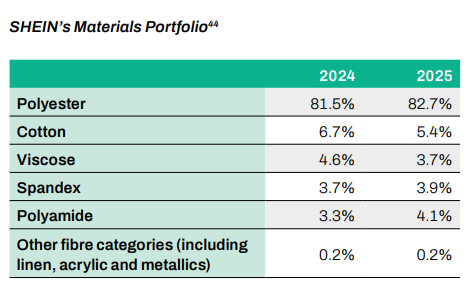
A screenshot from Shein's 2025 Sustainability and Social Impact Report
Taking the current geopolitical and business climate into account, it feels uncharacteristic of a low-quality fast-fashion company based in China to acquire a Millennial tech bro's girlfriend's favorite brand. Good on You tells consumers to "avoid" Shein, so the retail group's interest in an "ethical" fashion brand launched on a sustainability platform will be interesting to watch play out. It feels like Everlane, around $90 million in debt, had been shopping around for a sale to save it—and Shein's $100 million was sweet enough.
Everlane's not perfect, however. Its sustainability efforts haven't always been great, with low transparency ratings even in the early days of the company along with accusations of misleading environmental claims. Good on You gives Everlane a rating of "It's a Start," its middle rank on a scale of poor to excellent overall. Good on You cites a lack of transparency around sourcing, in addition to Everlane's use of materials such as silk and exotic animal hair. While formal values do exist at Everlane, what's missing is implementation.
Greenwashing aside, Everlane also came under fire for union busting in 2020, attracting the attention of Senator Bernie Sanders for allegedly using the pandemic to suppress labor organizing. While these two brands have marketed themselves so differently, one has to question if their values have been more similar than expected all along. Heated's Emily Atkin said of this sale, "I'm here to tell you that Everlane was never actually "good" for the planet. It was, however, really good at selling the idea that buying lots of new clothes could be sustainable. And that's what Shein is actually buying: not an eco-friendly company, but an eco-friendly image."
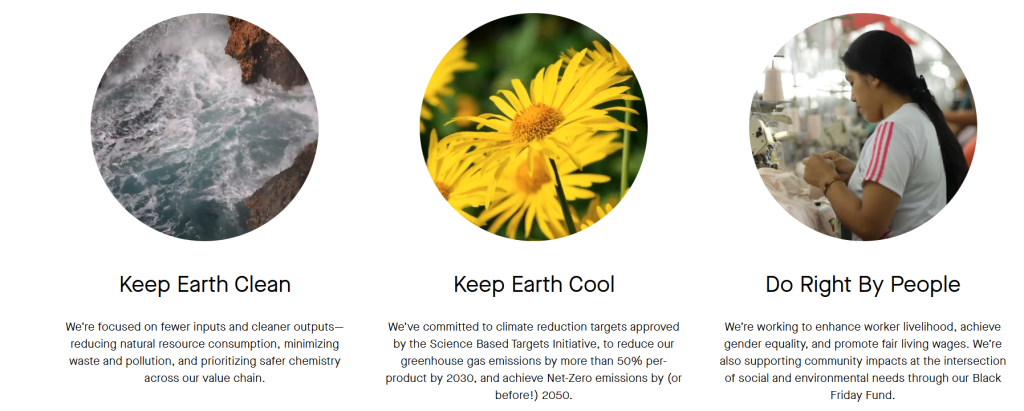
A screenshot from Everlane's 'Sustainability' page
Consumers in 2026 can't afford to spend money on items they don't truly love, and where the item comes from is important to a customer conscious of values-driven consumption. High brand values are still a factor for retail consumers, and business' performative ethics have proven to be a deterrent. This age of information, thanks to the Internet, allows customers to fact-check anything instantly and access others' anecdotes through community forums, product reviews, and user-generated content on social media. In a period of widespread access to truth, and accordingly, responsibility, customers care about businesses' ethical motives.
Informing leaders, employees, and customers alike of the steps in place to continue upward growth in both marketed and internal company values is essential. Hiring employees who are responsible for ethics, inclusion, sentiment listening, and customer experience is becoming more important now than it has ever been before. In tandem with properly upheld regulations, thorough employee training should be supported regularly. Authenticity in brand policies, infrastructure, and employee experience is also necessary in a time when customers are curious about what values they're supporting with their purchases.
While this acquisition was not on my 2026 business bingo card, it's starting conversations about what we as customers are empowered to uphold with our dollar. The modern consumer can see right through brand performativism. Authentically adding or strengthening your business' transparency as a core value will result in increased loyalty and satisfaction, for customers, employees, and leaders.
If you have thoughts on this topic or other CX stories, let's chat! Find me at london.whiting@cmpteam.com.
Image credit to Thirdman via Pexels.